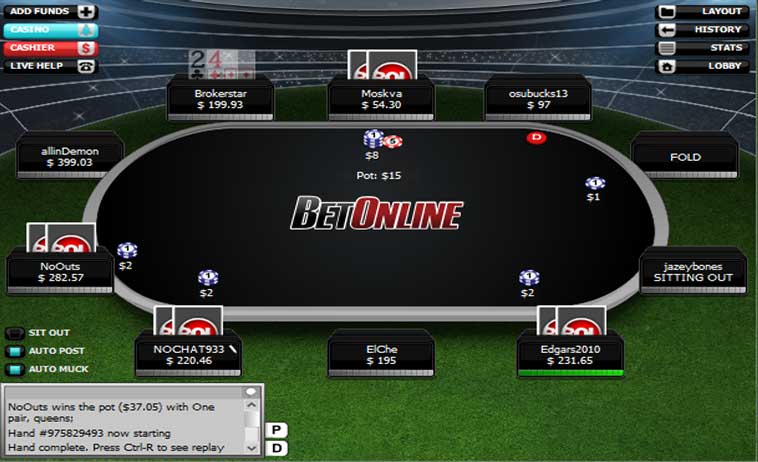
Texas Holdem Game Rules Tutorial: Master Poker in 2026
May 15, 2026Overview
Quick Summary
This Texas Holdem game rules tutorial provides a complete breakdown of poker mechanics, betting rounds, hand rankings, and 2026 strategic adaptations. Learn how to manage volatility, understand the rake, and leverage table position to maximize your win rate in both cash games and tournaments.
| Feature | Detail |
|---|---|
| Game Type | Community Card Poker |
| Deck | Standard 52-Card Deck |
| Players | 2 to 10 per table |
| Primary Objective | Win the pot (best hand or force folds) |
| House Edge | Rake (Percentage of the pot) |
| Volatility | Extremely High |
| Key Guide | Texas Holdem game rules tutorial |
Welcome to the most authoritative Texas Holdem game rules tutorial available in 2026. Whether you are stepping into a glamorous land-based casino poker room or logging into a cutting-edge digital platform, mastering the fundamentals is your first step toward profitability. This Texas Holdem game rules tutorial is designed to transform beginners into formidable opponents by covering everything from basic mechanics to advanced Game Theory Optimal (GTO) strategies.
As the cornerstone of the global poker industry, the game requires a unique blend of skill, psychology, and mathematical precision. By following this Texas Holdem game rules tutorial, you will learn how to navigate the high-stakes environment of modern poker with confidence, ensuring you make mathematically sound decisions at every stage of the hand.
How to Play
When diving into any Texas Holdem game rules tutorial, understanding the core objective is paramount. Your ultimate goal is to win the pot, which accumulates all bets placed by players during a single hand. You achieve this by either holding the strongest five-card hand at the showdown or executing a strategic bluff that forces all other players to fold before the final cards are revealed.
The Dealer Button and Blinds
Every practical Texas Holdem game rules tutorial emphasizes the importance of the dealer button and the blind structure. The button dictates the flow of action, rotating clockwise after every single hand. The two players seated immediately to the left of the button must post mandatory bets known as the “small blind” and the “big blind.” These forced bets ensure there is always money in the pot, driving the action and preventing players from simply folding every hand without penalty.
The Importance of Table Position
A crucial chapter in our Texas Holdem game rules tutorial is mastering table position, which separates amateurs from professionals. Position refers to the order in which players act. “Early Position” (like Under the Gun) is disadvantageous because you must act without knowing what your opponents will do. Conversely, “Late Position” (like the Cutoff or the Button) provides a massive information advantage, allowing you to see how others behave before making your decision. Playing tighter in early position and wider in late position is a fundamental strategy.
The Four Betting Rounds
A comprehensive Texas Holdem game rules tutorial must break down the four critical betting streets in meticulous detail:
- Pre-Flop: Each player is dealt two private “hole cards.” The action begins with the player to the left of the big blind. Players evaluate their starting hands and decide whether to enter the pot.
- The Flop: The dealer burns one card and reveals three community cards face-up. A new betting round commences, starting with the first active player to the left of the button. This street defines the texture of the board.
- The Turn: Another card is burned, and a fourth community card is dealt. The betting structure remains the same, though bet sizing typically increases as the pot grows.
- The River: The fifth and final community card is exposed. This triggers the final betting round, leading to the ultimate showdown if more than one player remains.
Mastering these specific betting streets is the core focus of this Texas Holdem game rules tutorial.
Player Actions
During these betting rounds, this Texas Holdem game rules tutorial outlines five possible actions you can take:
- Fold: Discarding your hand and forfeiting any claim to the current pot.
- Check: Passing the action to the next player without betting (only possible if no prior bet was made in that round).
- Bet: Placing the first wager of the betting round.
- Call: Matching the exact amount of a previous bet to stay in the hand.
- Raise: Increasing the size of the current bet, forcing opponents to pay a higher price to continue.
Official Hand Rankings
No Texas Holdem game rules tutorial is complete without a deep dive into the standard poker hand hierarchy. From strongest to weakest, the combinations are:
- Royal Flush: Ace, King, Queen, Jack, and 10, all of the exact same suit.
- Straight Flush: Five consecutive cards of the same suit.
- Four of a Kind: Four cards of identical rank (e.g., four Aces).
- Full House: Three of a kind combined with a pair.
- Flush: Any five cards of the same suit, non-consecutive.
- Straight: Five consecutive cards of mixed suits.
- Three of a Kind: Three cards of the same rank.
- Two Pair: Two distinct pairs (e.g., two Kings and two 8s).
- One Pair: Two cards of the same rank.
- High Card: The highest single card when no other recognized hand is made.
In the event of a tie, the highest “kicker” (side card) determines the winner. Memorizing this exact hand ranking list is a non-negotiable step in our Texas Holdem game rules tutorial.
Bonus Features
While traditional poker is strictly a player-versus-player endeavor, modern casinos and online platforms have introduced exciting elements to enhance the experience. In this unique section of our Texas Holdem game rules tutorial, we explore the “Bonus Features” you might encounter in modern card rooms.
Bad Beat Jackpots and High Hands
Many prominent poker rooms offer a Bad Beat Jackpot. If a remarkably strong hand (such as Four of a Kind) is beaten by an even stronger hand (like a Straight Flush), the entire table shares a massive, progressive jackpot prize. Additionally, High Hand promotions reward players who make the strongest hand during a specific time frame. Recognizing how these promotions affect table dynamics is a unique aspect of this modern Texas Holdem game rules tutorial, as players may alter their strategies to chase these bonuses.
Casino Variant Side Bets
If you are playing house-banked variants like Ultimate Texas Holdem against a dealer, you will find optional bonus side bets. The “Trips” bonus, for example, pays out if your final five-card hand is Three of a Kind or better, regardless of whether you actually beat the dealer’s hand. A thorough Texas Holdem game rules tutorial advises caution with these casino side bets, as they carry a high house edge compared to the base game.
Tournament Bounties and PKOs
In 2026, tournament poker has heavily embraced the bounty system. As part of this Texas Holdem game rules tutorial, we highly recommend exploring Progressive Knockout (PKO) formats for extra bonus bounties. In these events, eliminating an opponent awards you an immediate cash prize, while simultaneously increasing the bounty on your own head, creating thrilling, action-packed dynamics.
The 2026 Digital Landscape: AI and Security
A cutting-edge Texas Holdem game rules tutorial must address the rise of Real-Time Assistance (RTA) software in 2026. Top-tier online poker sites now utilize advanced behavioral analysis and AI-driven security protocols to ensure a fair playing field, banning accounts that use illegal software. Adapting to these technological shifts is crucial for any dedicated student of this Texas Holdem game rules tutorial, ensuring you play on safe, regulated platforms.
RTP/Volatility
Unlike traditional slot machines, poker does not have a fixed Return to Player (RTP) percentage programmed into a machine. Therefore, this Texas Holdem game rules tutorial approaches RTP and volatility through the lens of Win Rate, Rake, and Variance.
Understanding the Rake
Because you compete against other players rather than the house, the casino generates revenue by taking a “rake”—a small percentage (usually 2% to 5%) capped at a specific amount from each cash game pot, or an entry fee in tournaments. In the context of this Texas Holdem game rules tutorial, overcoming the rake is your primary mathematical hurdle to profitability. To achieve a positive ROI (Return on Investment), your skill edge over your opponents must be large enough to beat both them and the casino’s collection.
Navigating High Volatility and Variance
The volatility in this card game is notoriously extreme. Even if you consistently make the statistically correct decision (a play with positive Expected Value or +EV), short-term variance can lead to brutal losing streaks known as downswings. This Texas Holdem game rules tutorial stresses that poker is a long-term game where mathematical equilibrium eventually prevails. Managing your emotional state to avoid “tilt” (playing poorly out of frustration) is just as important as knowing the math.
Bankroll Management
To survive the high volatility detailed in this Texas Holdem game rules tutorial, strict bankroll management is absolutely essential. In 2026, professional players universally recommend having at least 30 to 50 buy-ins for cash games, and upwards of 100 buy-ins for multi-table tournaments. This strict financial discipline ensures that the inevitable swings of poker variance do not bankrupt you before your long-term skill edge can materialize.
FAQ
To conclude this comprehensive guide, we have compiled the most frequently asked questions into this final section of our Texas Holdem game rules tutorial.


Editorial Review: This guide has been reviewed by the editorial team for clarity, practical value, mobile usability, payment safety, and safer decision-making.